Buying a Farm in Marrakech: The Complete Guide
L'équipe Capital Parc · 7 août 2026 · 3 min read
Olive grove, working farm, or estate to develop: how to buy a farm around Marrakech, what to check, and the pitfalls of rural land.
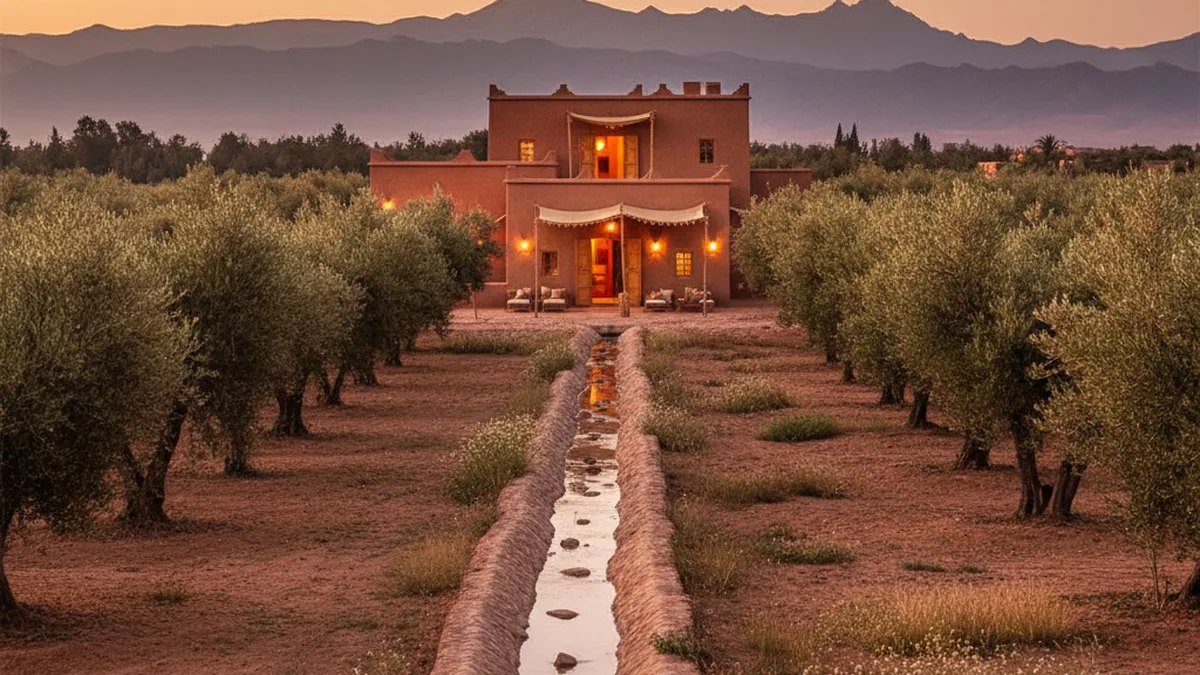
A farm is the most "deeply Moroccan" property on the Marrakech market: an olive grove in the Haouz plain, a working farm with its well and house, or an estate to transform into a project. It is also the purchase that requires the most checks — here is the complete process.
Where do farm buyers look?
Four main axes concentrate the offer around Marrakech:
- The Fès Road, the northern corridor for large agricultural plots and cereal or olive farms.
- The Ourika Road and Sidi Abdellah Ghiat, to the southeast: farms close to the city, highly sought after for mixed residential-agricultural projects.
- Tahanaoute and the Atlas foothills: estates with views, terraced olive groves.
- The Amizmiz road towards Lake Takerkoust: large plots for agritourism projects.
The three types of farms
- The working farm: productive plantations, controlled water, sometimes equipment and staff. It "earns" from day one — and is priced accordingly.
- The heritage olive grove or orchard: the value is in the land and the trees; the farming is extensive. The good compromise for a productive country house.
- The estate to develop: land and potential — agritourism, livestock farming, rural guesthouse. The most freedom, the most procedures.
The five checks that make the purchase
- The land title at the Land Registry (Conservation Foncière) — unregistered rural land still exists: this is a legal issue to be addressed before any promise to purchase.
- Water: wells, boreholes, water rights, and their administrative status. A farm without controlled water is not a farm.
- The land's purpose: agricultural in the vast majority of cases — which raises the following question.
- The buyer's nationality: agricultural lands are reserved for nationals; for a foreigner, everything goes through the VNA (attestation de vocation non agricole - non-agricultural purpose certificate), which we study on a case-by-case basis — our dedicated guide details this mechanism.
- The actual boundaries: for large areas, a joint boundary survey avoids unpleasant surprises between the plan and the terrain.
Operate, lease out, or transform
A farm is bought with a project in mind. Direct operation requires a presence or a trusted manager; sharecropping entrusts the land to a local operator; transformation (rural gîte, guesthouse, agritourism) requires specific authorizations. Each option has its economics — we will quantify it with you before the offer, not after.
FAQ
How much does a farm cost around Marrakech? It all depends on the surface area, water, plantations, and distance from the city: a productive olive grove and an estate to develop are not in the same category. Describe your project to us — we will present you with options that match your actual budget.
Can a foreigner buy a farm? Not directly: land designated for agricultural use is reserved for nationals. The non-agricultural purpose certificate (VNA) can open a project to a foreign buyer — its feasibility is studied before any offer.
Can a farm become a guesthouse? Yes, this is a classic project — subject to operating authorizations and building compliance. Zoning and any necessary VNA are checked upstream.
What is the value of a farm without a land title? Unregistered land should be handled with great caution: prior registration or solid notarial guarantees are essential before committing.