Investing in Marrakech in 2026: the up-and-coming neighborhoods
L'équipe Capital Parc · 28 juin 2026 · 8 min read

Guéliz and Hivernage remain safe bets but expensive. An honest overview of the developing areas where you should look for the next capital gain.
In 2026, investors looking beyond Guéliz and Hivernage are turning to Marrakech's expansion zones: Targa and the Agdal-Amelkis corridor to the west and south, the Ourika road and Sidi Abdallah Ghiat toward the southeast, and the Fès road to the north. These neighborhoods combine still-affordable land, the gradual arrival of infrastructure, and rising rental demand. Here is an honest read on each one, with no made-up figures.
The essentials in 30 seconds
- Guéliz and Hivernage are safe bets, but the entry ticket has become high there: yield is now found on the outskirts.
- Targa is establishing itself as the natural extension of Guéliz to the west, with a residential fabric that is becoming denser.
- Agdal and Amelkis (south) attract the high end: villas, golf courses, gated residential developments.
- The Ourika road and Sidi Abdallah Ghiat offer land and plots for those targeting the long term and residential-leisure.
- The 2030 World Cup, co-hosted by Morocco: Marrakech is one of the host cities, which should accelerate local infrastructure.
Why the city is expanding outward
Marrakech grows according to a simple logic: when a central neighborhood becomes expensive and saturated, demand shifts to the immediate ring, then onto the major road corridors. Guéliz, the modern heart of the city, and Hivernage, the upscale hotel and residential district, have seen their prices climb over the years. The result: a buyer seeking yield or a margin for capital gain now looks where land remains available.
This outward-expansion movement follows the infrastructure: widened roads, network connections, public facilities, schools, and shops that move in. A neighborhood that is "on the rise" is almost always a neighborhood where these facilities arrive before prices settle on top of them.
Targa: the western extension of Guéliz
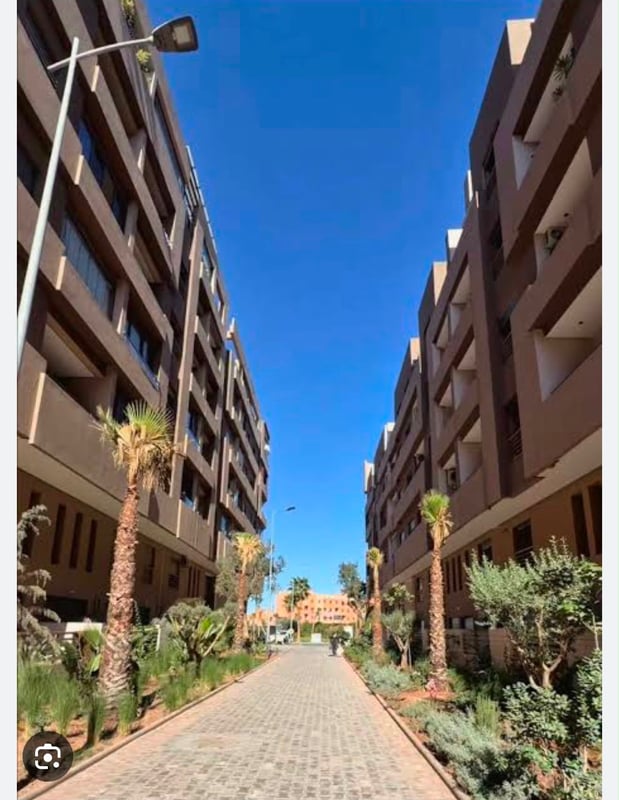
Targa is probably the clearest example of this expansion. Located in the extension of Guéliz to the west, the area has become denser in residential terms: villas, recent buildings, and a population looking for modern comfort without the prices of the center.
For whom?
Targa appeals to families and investors who want a modern, well-served property, with solid rental demand driven by working professionals and expats. It is a "consolidated rising value" profile rather than a "speculative gamble."
What to watch
Quality varies from one development to another. Check the standing of the co-ownership, the servicing, and the real proximity of amenities before you sign. The best opportunities here are often villas for sale in Marrakech or recent apartments.
Agdal and Amelkis: the upscale south
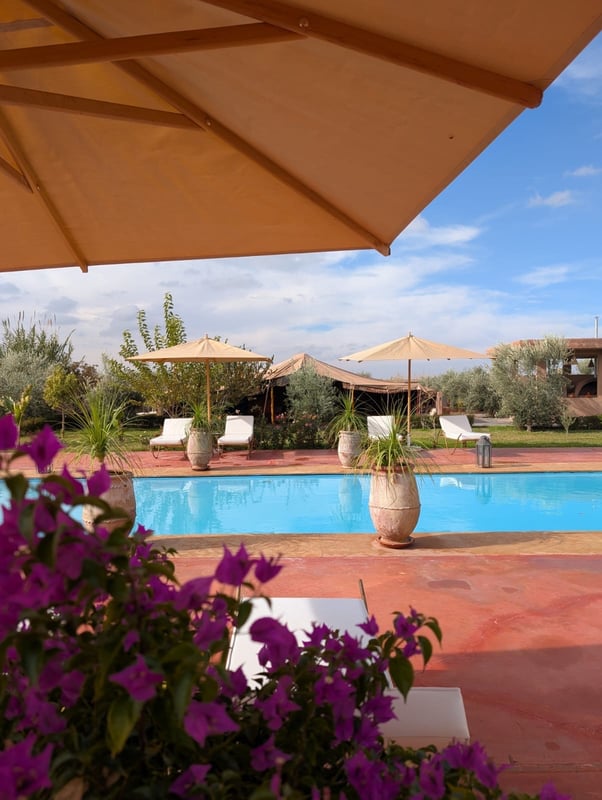
To the south of the city, the Agdal-Amelkis corridor concentrates a premium residential offer: villas with gardens, gated residences, a golf environment. It is a sector sought after by an affluent clientele, both Moroccan and foreign, who prioritize space, quiet, and security.
The potential here is not that of cheap land — this is the qualitative segment — but rather scarcity: well-located, high-quality products hold their value and re-let well, particularly in medium- and long-term rentals. For premium budgets, it is also the hunting ground for off-market properties, those confidential transactions that never go through public listings.
The Ourika road and Sidi Abdallah Ghiat: the land bet
Toward the southeast, the Ourika road and the municipality of Sidi Abdallah Ghiat represent a different profile: land, plots, and a longer investment horizon.
The appeal
This corridor benefits from a natural setting (proximity to the Ourika Valley, views of the Atlas) that attracts residential-leisure: second homes, farms, agritourism projects. For a patient investor, buying land on a corridor that is being serviced is a classic strategy for capital gain over time.
The precautions
This is also the profile most demanding in terms of checks. The legal status of the land (land title, registration application), buildability, servicing, and the real timeline for infrastructure must be examined with a professional. Never rely on an announced project schedule without having it confirmed (to be examined case by case with a professional).
The Fès road: the northern ring
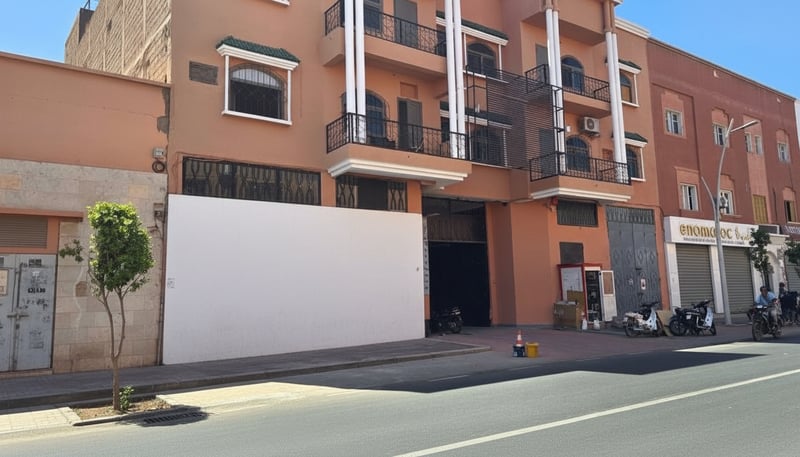
To the north, the Fès road accompanies the city's residential sprawl. Here you find a mix of subdivisions, affordable developments, and land. The profile resembles that of a first-time-buyer area: less prestigious than the south, but potentially interesting for a first investment or a rental yield targeting a local clientele.
As always on the outskirts, value depends heavily on the real distance to amenities and the progress of connections. The same corridor can offer excellent deals in one spot and overvalued products in another.
Neighborhood comparison table
| Neighborhood / corridor | Profile | Main strengths | For whom | Indicative price |
|---|---|---|---|---|
| Targa | Modern residential, densifying | Proximity to Guéliz, solid rental demand | Families, rental investors | 10,000 – 16,000 DH/m² |
| Agdal / Amelkis | Premium, golf, gated residences | Standing, scarcity, preserved value | High-end budgets, residence | 16,000 – 30,000 DH/m² |
| Ourika road | Land, residential-leisure | Natural setting, Atlas views, long-term potential | Patient investors, second homes | 10,000 – 18,000 DH/m² |
| Sidi Abdallah Ghiat | Land on the southeast outskirts | Available plots, capital-gain horizon | Land purchase, custom projects | 200 – 1,200 DH/m² (depending on servicing) |
| Fès road | First-time buyer, northern subdivisions | More accessible entry tickets | First investment, local yield | 10,000 – 18,000 DH/m² |
Price ranges depend heavily on the product, the precise location, and the standing: ask for a case-by-case estimate rather than relying on a neighborhood average.
Buying land on the outskirts: the VNA reflex
On the outskirts (Sidi Abdallah Ghiat, Ourika road, Fès road, etc.), many plots are originally agricultural. To build a villa there, you generally need to obtain a Non-Agricultural Use Certificate (VNA): issued after administrative review, it certifies that the land can change its use to residential.
This is what explains the enormous price gap (from 200 to 1,200 DH/m²): a purely agricultural plot is worth a fraction of a parcel that is serviced with a validated VNA or a lot that is already titled and buildable. Before any commitment, have a professional and the notary verify: the land title (or the registration application), the zoning on the development plan, and the VNA status. A very low price per m² sometimes hides land that is not buildable as it stands.
2030 World Cup: a potential accelerator, not a certainty
Morocco is co-hosting the 2030 World Cup with Spain and Portugal. Marrakech is one of the six confirmed Moroccan host cities: Casablanca, Rabat, Tangier, Marrakech, Agadir, and Fès.
What to take from this, without over-interpreting it: a major event of this scale is generally accompanied by infrastructure investments (transport, hospitality, roads) that benefit the outskirts. But investing solely on the basis of an event schedule is risky. Consider the World Cup a possible bonus, not the foundation of your decision.
How to spot a neighborhood on the rise: the checklist
Before you decide, run each area through these concrete criteria:
- Is the infrastructure arriving? Roads, networks, schools, and shops being installed are the best early signal.
- Is rental demand real? The presence of working professionals, expats, students, or tourists depending on the targeted product.
- Is land still affordable? A marked price gap with the neighboring central area signals catch-up potential.
- Is the legal status clean? Land title, buildability, compliance: non-negotiable, especially for plots.
- Who is building around it? The arrival of serious developers and high-standing programs pulls a neighborhood upward.
- What is your horizon? Targa and Agdal are more "ready"; Ourika and Sidi Abdallah Ghiat require patience.
FAQ
Should you still buy in Guéliz and Hivernage in 2026?
Yes, if your goal is security and liquidity rather than maximum capital gain. These are premium locations that resell and rent easily. The trade-off: a high entry ticket and a more limited margin for growth than in developing areas.
Which neighborhood to choose for a first rental investment?
Targa and the Fès road are often cited for a first purchase: more affordable tickets than the center and existing rental demand. The right choice nonetheless depends on your budget, the type of property, and the targeted tenant — personalized guidance avoids costly mistakes.
Is buying land on the outskirts risky?
The main risk is legal and time-related: the status of the title, buildability, and the real timeline for the arrival of infrastructure. With the right checks, land on a corridor being serviced remains a proven strategy for capital gain. Never sign without prior verification.
Will the 2030 World Cup drive prices up?
Possibly, via the infrastructure investments that accompany this type of event. But Marrakech is not yet confirmed as a host city, and price effects are hard to predict. It is better to invest on solid fundamentals and treat the event as a possible bonus.
Let's talk about your project
This article provides benchmarks, not personalized financial advice: every budget and every goal calls for a tailored strategy. To go further, explore our properties for sale in Marrakech and discuss your project with Loubna, our AI advisor, available at any time to guide your initial searches. You can also request an estimate or contact us directly for human support.